
Responsible Gambling at Guts Casino
At Guts Casino, we believe that gambling should remain an enjoyable form of entertainment and never become a source of financial stress, emotional harm, or personal difficulties. As an independent gambling information and affiliate platform serving Canadian players, our mission is to provide educational content that encourages informed decisions and promotes healthy gaming behaviours.
Our website publishes casino reviews, bonus information, slot guides, payment method comparisons, and educational resources. Some pages may contain affiliate links that generate a commission when users visit third-party operators. These commercial relationships never influence our editorial commitment to responsible gambling, player safety, and transparency.
This Responsible Gambling page explains practical ways to gamble responsibly, recognise signs of problematic behaviour, access support services available in Canada, and protect vulnerable individuals from gambling-related harm.
Building a Healthy Relationship with Gambling Entertainment
Responsible gambling begins with understanding that casino games are entertainment activities and not reliable methods of earning money. Every wager involves an element of chance, and no strategy, betting system, or previous result can guarantee future outcomes. Maintaining realistic expectations is one of the most effective ways to keep gambling enjoyable.
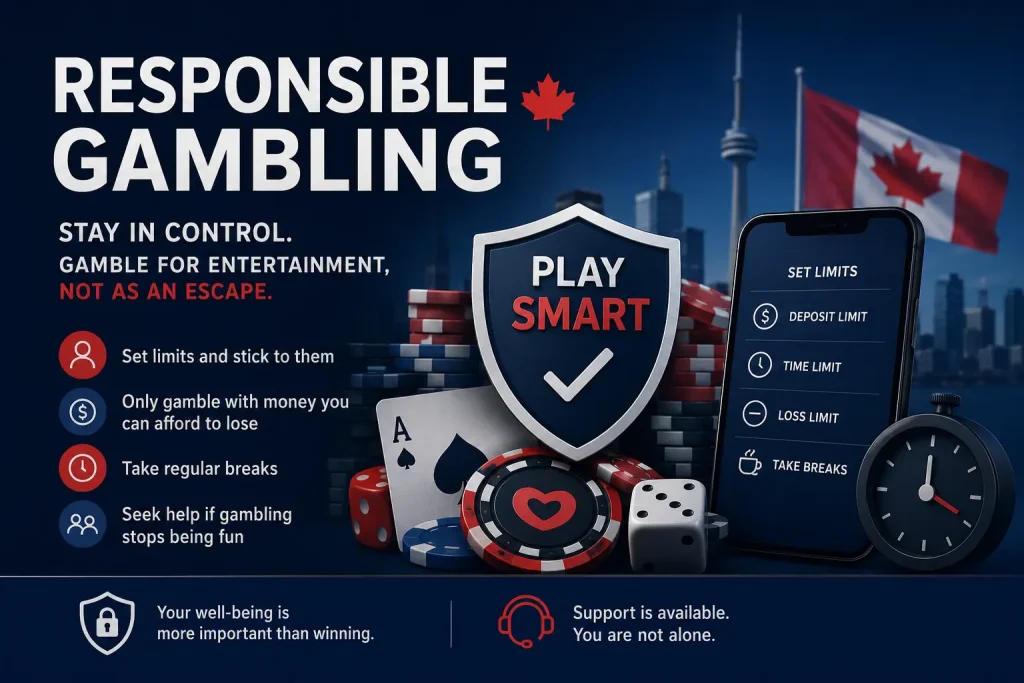
Healthy gambling habits often include setting clear limits before playing, taking regular breaks, and treating gambling expenses as part of a leisure budget. Players should only gamble with money they can comfortably afford to lose and avoid chasing losses or attempting to recover previous spending through additional betting sessions.
If you are new to online gambling, our FAQ page contains useful information about gaming terminology, casino features, and common questions that may help you make more informed decisions before participating in any gambling activities.
Warning Signals That Deserve Attention
Problem gambling can develop gradually and may not always be immediately noticeable. In many cases, changes in behaviour, finances, or emotional wellbeing appear before a person recognises that gambling has become harmful.
The following signs may indicate that gambling habits require attention:
- Increasing gambling spend beyond planned budgets.
- Borrowing money to continue playing.
- Feeling anxious, guilty, or irritable after gambling.
- Concealing gambling activities from family members.
- Neglecting work, studies, or personal responsibilities.
- Using gambling to cope with stress or emotional difficulties.
Experiencing one or more of these situations does not automatically mean that a gambling disorder exists. However, they may indicate that additional support, spending controls, or professional advice could be beneficial.
Managing Your Budget and Setting Financial Boundaries
Financial discipline plays a major role in responsible gaming. Players should establish spending limits before participating in gambling activities and avoid using money intended for rent, household expenses, loan repayments, or savings goals.
Many experienced players use separate entertainment budgets to ensure that gambling expenses remain controlled and transparent. Recording deposits and withdrawals can also help identify spending patterns and prevent impulsive decisions.
Practical budgeting techniques include:
- Set a monthly entertainment allowance and never exceed it.
- Determine a maximum loss limit before each gaming session.
- Avoid gambling when under financial pressure.
- Never use credit to recover losses.
- Take a break after reaching predetermined limits.
Examples of Personal Gambling Controls
| Control Method | Purpose |
|---|---|
| Deposit Limits | Restrict the amount of money available for gambling activities. |
| Session Time Limits | Reduce excessive play and encourage regular breaks. |
| Cooling-Off Periods | Provide temporary breaks from gambling activity. |
| Bank Notifications | Monitor gambling transactions and spending habits. |
Emotional Wellbeing and the Impact of Gambling Harm
Gambling difficulties can affect much more than finances. Problem gambling may contribute to anxiety, depression, relationship conflicts, reduced productivity, and feelings of isolation. Emotional distress can also lead individuals to gamble more frequently in an attempt to escape difficult circumstances, creating a harmful cycle.
Friends and family members often experience significant stress when someone close to them develops unhealthy gambling habits. Open communication, early intervention, and access to professional support services can help reduce the long-term impact on personal relationships and emotional health.
Individuals seeking information about gambling-related mental health concerns may find assistance through the Centre for Addiction and Mental Health (CAMH), which provides educational resources and guidance regarding addiction and wellbeing.
Myths That Can Encourage Risky Gambling Decisions
Misunderstandings about gambling frequently contribute to poor decision-making. Believing that a machine is “due” to pay out or assuming that skill can overcome random outcomes may encourage players to spend more money than intended.
Some common misconceptions include:
- Past losses increase the chances of future wins.
- There are guaranteed systems that beat casino games.
- Winning streaks can be predicted.
- Gambling can solve financial difficulties.
- Playing longer always improves winning opportunities.
Understanding randomness and probability helps players maintain realistic expectations and approach gambling with greater caution.
Self-Exclusion and Digital Protection Tools in Canada
Canadian players who feel that gambling is becoming difficult to control can consider self-exclusion programs and digital blocking solutions. Several provinces provide mechanisms that allow individuals to restrict their access to regulated gambling services for specific periods.
Ontario residents can learn more about available self-exclusion options and responsible gaming initiatives through iGaming Ontario (iGO). Provincial programs may differ depending on where players reside, so checking local requirements and available tools is recommended.
Additional protection may also be available through software such as BetBlocker, GamBan, GamBlock, and parental control applications that restrict access to gambling websites and applications across multiple devices.
Keeping Young People and Vulnerable Individuals Safe
Underage gambling remains a serious concern in Canada. Gambling products are intended only for adults who meet the legal age requirements in their province or territory. Parents and guardians should take reasonable measures to prevent children from accessing gambling-related content and payment methods.
Protective steps can include using device restrictions, maintaining secure passwords, monitoring online activities, and discussing the risks associated with gambling. Individuals experiencing mental health challenges or financial vulnerability may also benefit from additional safeguards and support networks.
Our editorial policies and website information are explained in greater detail on our About Us page and are supplemented by our Privacy Policy, which explains how personal information may be processed when users interact with our platform.
Where to Turn if Gambling Stops Being Fun
Seeking support is a positive and responsible decision. Assistance is available to players, family members, and friends who may be affected by gambling-related difficulties. Early intervention can significantly improve recovery outcomes and reduce emotional and financial harm.
Canadian residents may access information, referral services, and support options through ConnexOntario, which connects individuals with addiction and mental health resources available across Ontario.
People who prefer peer support can also contact Gamblers Anonymous Canada, where confidential group meetings and recovery programs are available for individuals experiencing gambling-related challenges.
Our Commitment to Responsible Gambling Information
As an independent affiliate and informational website, we do not operate gambling services, process bets, or manage player accounts. The content published on our platform is intended solely for educational and informational purposes and should never be interpreted as financial, legal, or medical advice.
By continuing to use our website, users agree to review our Terms & Conditions and acknowledge that responsible gambling remains a personal responsibility that requires informed decision-making and self-awareness.
If you have questions regarding our responsible gambling policies, editorial standards, or wish to report concerns related to gambling-related content published on our website, you may contact our team by email at [email protected] or visit our Contact Page. We encourage anyone experiencing gambling-related harm to seek professional assistance without delay.
Frequently Asked Questions
Can responsible gambling tools guarantee that I will never develop gambling problems?
No. Deposit limits, self-exclusion tools, and budgeting strategies can reduce risks, but they cannot completely eliminate the possibility of gambling-related harm. Continuous self-awareness remains essential.
What should I do if a family member has a gambling problem?
Encourage open conversations, avoid judgement, and suggest professional support services. Family members may also benefit from counselling and support organisations that specialise in gambling-related harm.
Is gambling addiction only a financial issue?
No. Gambling problems often affect emotional wellbeing, relationships, employment, and mental health in addition to personal finances.
Can I exclude myself from gambling in Canada?
Many Canadian provinces offer self-exclusion measures and responsible gaming tools. Availability depends on your location and the services provided by local regulated operators.
Why does an affiliate website provide responsible gambling information?
Independent gambling websites have a responsibility to educate readers about gambling risks, encourage informed decisions, and provide access to support resources when needed.